

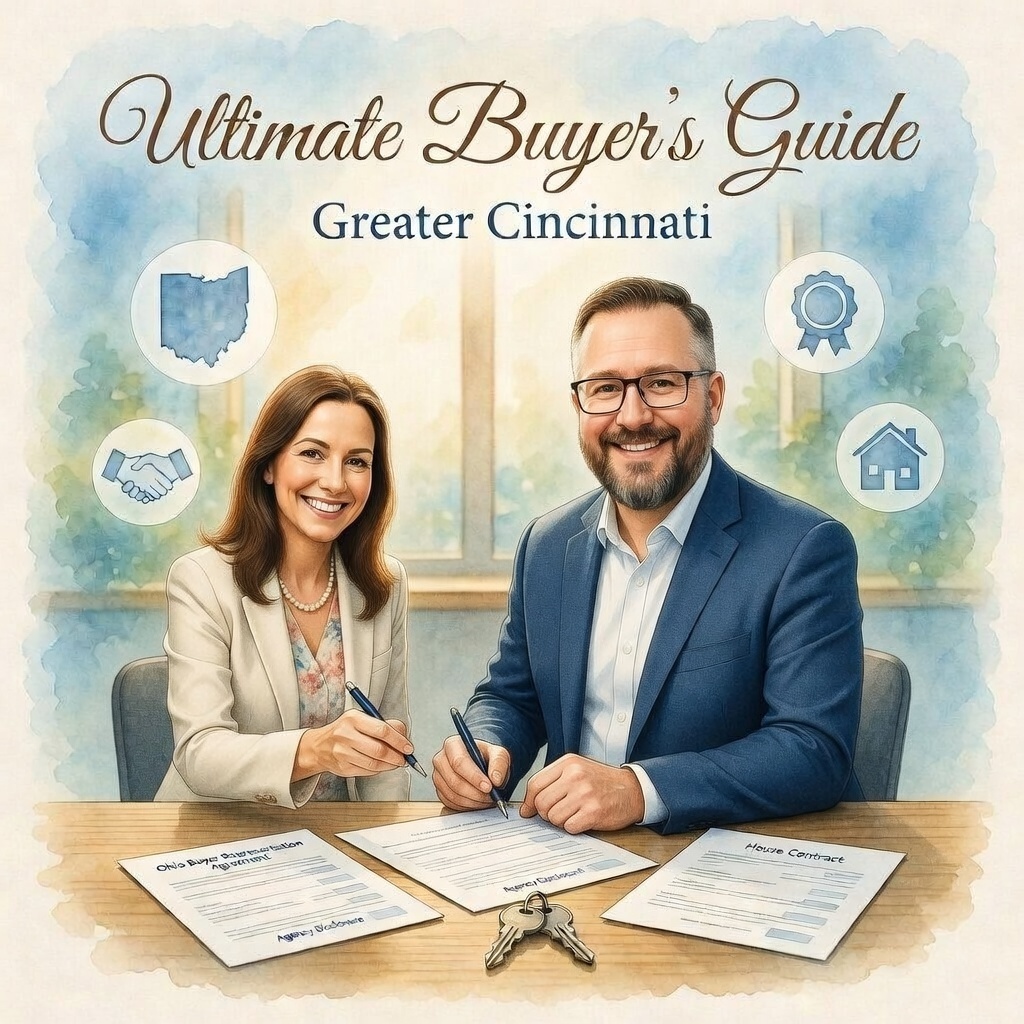
Your Ultimate Homebuyer Checklist & Timeline:
Signing with Kyle Null at Coldwell Banker Realty Through Closing in Greater Cincinnati (Loveland, Mason, Maineville, Landen Farm, Blue Ash & Beyond)
Introduction This comprehensive checklist and timeline outlines every step when you partner with Kyle Null, Coldwell Banker Realty, as your exclusive buyer’s agent.
Ohio law requires clear agency disclosure and a written buyer representation agreement before substantive work (showings, offers, negotiations) can begin. All processes comply with Ohio Revised Code Title 47, Ohio Admin. Code 1301:5-6, HB 466 (2024), NAR 2026 Code of Ethics, Coldwell Banker policies, and Fair Housing laws.
Phase 1: Initial Consultation & Document Signing (Day 1–3) Checklist
- Schedule free 30-minute strategy call or in-person meeting (have an office in Loveland and Montgomery).
- Review and sign the following documents (required before any property showings, substantive search, or negotiation work).
- Discuss your goals, budget, timeline, and neighborhood priorities.
- Provide pre-approval letter or lender referral.
- Discuss required documents that will need signed before showings.
Required Documents –
| Document | What It Is & Purpose | Required by Ohio Law? | Timing & Notes | Key Source/Link |
|---|---|---|---|---|
| Ohio Consumer Guide to Agency Relationships | Explains agency types and agent duties (loyalty, confidentiality, disclosure, etc.). Informational only. | Yes – ORC §4735.56 & Admin. Code 1301:5-6-05 | Given at first substantive contact. Acknowledge receipt (initials only). | Ohio Guide |
| Agency Disclosure Statement | States who represents whom (e.g., buyer only). Confirms your representation. Discloses any personal relationships. | Yes – ORC §4735.72 | Signed at initial consultation before showings or negotiations. Binding. | Ohio Forms |
| Ohio Exclusive Buyer Representation Agreement | Contract making Coldwell Banker your exclusive agent. Covers term, scope, compensation. | Yes – HB 466 (2024) | Signed before any property showings or substantive work. Standard for full representation. | Ohio FAQs |
| Single Property Buyer Representation Agreement (optional) | Same as exclusive but limited to one specific property. Shorter term (default 120 days). | Yes – Qualifies under HB 466 for single-property focus | Use only if targeting one home; otherwise use exclusive version. | Coldwell Banker internal form. |
Key Notes
- No showings allowed until buyer representation agreement is signed (HB 466 rule).
- Consumer Guide = info only; the other two create the legal relationship.
- Compensation in Agreement = Commitment to pay $425 Fee to Coldwell Banker + Buyer Agent's Commission %
- Sellers are not required to offer compensation to buyer’s broker.
- Any offer of compensation from seller/listing broker is voluntary and negotiable.
All commission terms are fully negotiable and disclosed per Ohio law and NAR guidelines.
Phase 2: Financing & Pre-Approval Lock (Week 1)
Mortgage Checklist
- Submit full loan application (30-day typical commitment for conventional financing).
- Order credit, income, and asset verification.
- Secure pre-approval letter (required for financed offers; lender issues after review).
Cash Offer Alternative
- Provide proof of funds letter/statement instead of pre-approval.
- Proof of funds = current bank/investment statement(s) showing liquid assets ≥ purchase price + closing costs (typically 2–5% extra).
- Must be dated within 30 days; redacted account numbers acceptable but full balance visible.
- Title company/escrow may require verification of source of funds (e.g., recent transfers, sale proceeds) for compliance (anti-money laundering rules).
- Cash offers skip appraisal contingency in many cases (higher risk if value lower than price) but close faster (14–21 days typical).
Cash vs. Financed – Simplified Comparison
| Aspect | Financed Offer | Cash Offer | Winner / Key Trade-off |
|---|---|---|---|
| Proof Required | Pre-approval letter | Proof of funds (bank statement) | Cash simpler, but must show full amount |
| Closing Timeline | 30–45 days | 14–21 days | Cash much faster |
| Contingencies | Financing + appraisal included | Often waived | Cash stronger offer, higher buyer risk |
| Earnest Money | 1–2% typical | 5–10% common | Cash shows more commitment |
| Seller Preference | Standard | Preferred in competition | Cash wins ~70% of multiple offers (2026) |
| Buyer Cost/Risk | Interest + possible PMI | Full upfront, no interest | Cash ties up capital, no loan costs |
Phase 3: House Hunting & Neighborhood Deep Dive (Weeks 1–6) Checklist
- Weekly curated tours (MLS + AI Enhanced Searches + Pocket and Off Marketing Coldwell Banker Listings)
- Compare sold comps via CMA.
- Fine tuning your search criteria as you learn what you want and don't want from showings.
- Maintain a rating scorecard after each showing, so we can continue to refine your search criteria.
Phase 4: Making an Offer (When Ready) Checklist
- Draft Ohio Residential Property Purchase Contract.
- Documents are signed and kept tract of through a digital portal called Dotloop.
- Include: price, earnest money (typically 1–2%), contingencies (inspection, appraisal, financing, title), closing date, possession.
- Submit pre-approval letter + proof of funds.
- I'll present the offer (in-person or electronic).
- Negotiation rounds until mutual acceptance.
Phase 5: Post-Acceptance Timeline with Mortgage (Days 1–45 Typical)
| Day Range | Milestone | Your Checklist Items | Responsible Party | Key Documents / Actions |
|---|---|---|---|---|
| Day 1 | Offer accepted & signed | Deliver earnest money to escrow (title company) | Buyer / Agent | Mutual acceptance email + contract |
| Days 1–10 | Inspection period | Schedule professional home inspection + additional services | Buyer (you hire) | Inspection report delivered to seller |
| Days 3–14 | Appraisal ordered | Lender orders (you pay unless negotiated) | Lender | Appraisal report |
| Days 7–21 | Title search & insurance | Review title commitment for liens, easements, survey | Title company | Title policy issued |
| Days 10–21 | Repair negotiations | Request repairs or credits based on inspection | Agent negotiates | Amendment to contract |
| Days 21–30 | Final underwriting | Lender clears conditions | Lender | Clear-to-close letter |
| Day 30–45 | Final walk-through | Verify repairs completed, no changes | Buyer + Agent | Walk-through form |
| Closing Day | Closing | Sign Closing Disclosure, wire funds, receive keys | All parties + title company | Deed recorded, keys transferred |
Phase 5: Post-Acceptance Timeline – Cash Offer Version (Typical 14–30 Days)
| Day Range | Milestone | Your Checklist Items | Responsible Party | Key Documents / Actions | Notes / Cash-Specific Considerations |
|---|---|---|---|---|---|
| Day 1 | Offer accepted & signed | Deliver earnest money to escrow (title company) | Buyer / Agent | Mutual acceptance email + contract | Earnest often 5–10% (stronger signal than financed) |
| Days 1–10 | Inspection period | Schedule professional home inspection + optional radon/sewer scope | Buyer (you hire) | Inspection report delivered to seller | Still recommended; cash buyers rarely waive fully |
| Days 1–14 | Title search & commitment | Review title commitment for liens, easements, survey issues | Title company | Title commitment + exceptions list | Same as financed; cash still needs clear title |
| Days 7–21 | Repair negotiations | Request repairs or credits based on inspection | Agent negotiates | Amendment to contract | Cash buyers often have more leverage in negotiations |
| Days 10–20 | Final underwriting | Confirm funds transfer readiness | Buyer | Proof of funds update if requested | No lender underwriting → faster; verify source if large transfer |
| Day 14–25 | Final walk-through | Verify condition unchanged / repairs done | Buyer + Agent | Walk-through form | Critical; no lender walkthrough requirement |
| Closing Day (14–30) | Closing | Bring certified funds / wire instructions; sign documents; receive keys | All parties + title company | Deed recorded, keys transferred | Cash closes faster; no lender funding contingency |
Phase 6: Closing & Beyond (Day 45+) Checklist
- Review Closing Disclosure 3 days before closing (TRID rule).
- Bring certified funds or wire instructions.
- Attend closing at title company (typically 30–60 minutes).
- Post-closing: change locks, utilities transfer, file homestead exemption if applicable (Ohio).
- 30-day follow-up call for any warranty or move-in issues.
- Optional: enroll in Coldwell Banker Realty CARES Foundation donation (voluntary, $0 default).
Phase 7: Post-Closing Support (Ongoing)
- Any real estate problem solving help you need.
- Vendor referrals (movers, painters, repairmen, landscapers, etc.)
- Annual market update and equity reports.
- Home-iversary Gift.
- Giving exceptional real estate service & support to anyone you refer.
When preparing to sell a home, many sellers wonder whether investing in a new roof will pay off at the closing table. A roof is one of the most important structural components of a house—and one of the most expensive. But does replacing it actually increase your home’s value?
The answer: A new roof can improve marketability, but buyers typically view it as maintenance, not an upgrade.
Let’s break down what that means—and what other items fall into the same category.
Does a New Roof Add Value?
A new roof can absolutely be beneficial when selling your home. It can:
- Boost buyer confidence
- Prevent inspection issues
- Improve curb appeal
- Shorten time on the market
However, most buyers see a functioning, leak‑free roof as a standard expectation. Because of that, replacing a worn roof rarely adds dollar‑for‑dollar value the same way a kitchen renovation or new hardwood floors might.
💡 Key Insight:
Buyers typically won’t pay extra for something they expect to already be in good condition.
Why a New Roof Is Considered Maintenance
Most buyers view a roof the same way they view:
- Plumbing
- Electrical systems
- Foundation
- HVAC performance
These aren’t features—they’re basic operational components of a home. If they’re not functioning well, buyers see them as problems that need to be fixed, not value‑added amenities.
A brand‑new roof might sway a hesitant buyer, but it typically won’t significantly raise the appraised value. Instead, it prevents decreases in value caused by:
- Leaks
- Missing shingles
- Active water damage
- Failed inspection reports
Think of a new roof as removing an objection—not creating new value.
Other Home Items Buyers Consider “Maintenance”
If you’re preparing to list your home, it’s important to understand which repairs or updates fall into the maintenance bucket. These items don’t usually increase value, but failing to address them often hurts your listing.
Below are the most common examples:
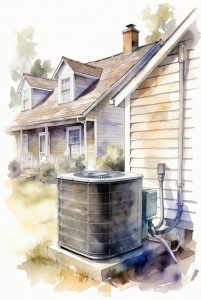
1. HVAC System (Heating & Cooling)
Buyers expect the HVAC to be fully functional and serviced regularly.
If it’s old or in poor condition, they’ll use it as leverage during negotiations.
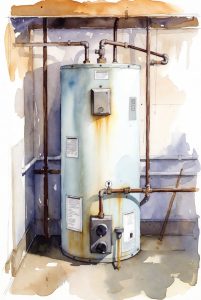
2. Water Heater
Like the HVAC, a water heater is considered a basic necessity—not an upgrade.
Replacing an aging one won’t add value, but it prevents inspection issues.

3. Windows in Poor Condition
While brand‑new windows can improve energy efficiency, replacing cracked, fogged, or rotting windows is seen simply as maintenance.
4. Exterior Paint & Siding Repairs
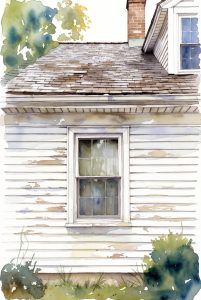
Peeling paint or damaged siding signals neglect and hurts curb appeal. Fresh paint improves marketability but isn’t considered an upgrade unless you dramatically change the aesthetic.

5. Gutters & Drainage
Functional gutters protect the home’s foundation. Clean, repaired gutters are expected—and failures here raise major red flags for buyers.
6. Driveway & Walkway Repairs
Fixing cracks or uneven pavement improves safety and curb appeal but is still standard maintenance.
So… Should You Replace the Roof Before Selling?
Here’s the decision guide I use with my clients:
Replace the roof if:
✔ It’s leaking or has active damage
✔ The inspector will likely flag it
✔ It’s at or beyond expected life (20–30+ years)
✔ Your market favors move‑in‑ready homes
Consider leaving it as-is if:
✔ It’s aging but still functioning properly
✔ You’re willing to offer a credit or adjust the price
✔ The buyer pool includes investors or remodelers
Final Thoughts
A new roof can absolutely help your home sell faster and smoother—but it’s usually treated as maintenance, not a value‑boosting upgrade. If you’re unsure whether it’s worth replacing before listing, let’s take a look at your specific home, condition, and market trends.
I’d be happy to provide a professional evaluation and help you make the best decision for your selling strategy.

Does a New Roof Increase the Value of a Home? A Homeowner’s Guide
When preparing to sell a home, many sellers wonder whether investing in a new roof will pay off at the closing table. A roof is one of the most important structural components of a house-and one of the most expensive. But does replacing it actually increase your home’s value? The answer: A new roof can […]
